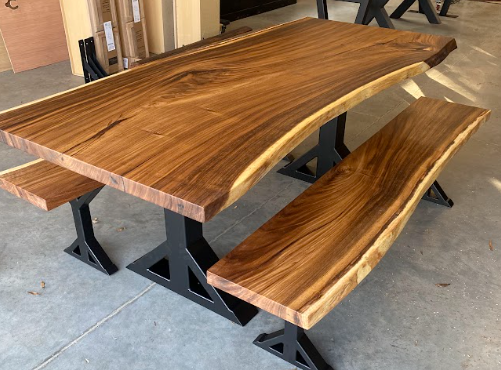
What Is Bastogne Walnut? A Rare Wood for Luxury Tables

March 25, 2026

Share this article

Bastogne walnut is a rare, high-performance hybrid wood created by crossing English walnut and Claro walnut. Known for its incredible strength, rapid growth, and stunning "fiddleback" or "curly" grain patterns, it is a premier choice for crafting luxury custom tables that serve as timeless family heirlooms.

Why is Bastogne walnut so rare?

Bastogne walnut is often referred to as a "paradox" in the world of forestry. It is a natural hybrid, specifically a cross between the English Walnut ( Juglans regia ) and the California Walnut, often known as Claro Walnut ( Juglans hindsii ). This rare combination was famously pioneered by the legendary botanist Luther Burbank in the late 19th century. Burbank was searching for a tree that could produce lumber quickly while maintaining the aesthetic beauty of traditional walnut species.

What makes it rare is its reproductive nature. Bastogne walnut trees are F1 hybrids, which means they are almost always sterile. They do not produce nuts that can grow into new Bastogne trees. Instead, they can only be created through deliberate grafting or when the two parent species happen to be in close proximity in a specific environment. Because of this, you won’t find entire forests of Bastogne walnut. They are typically found as single, isolated trees in California or in specialized plantations.

For custom furniture makers like us at Rustic River Designs, sourcing these slabs is a labor of love. We often look for reclaimed logs or trees that have reached the end of their natural life cycle. Because the supply is so limited, every Bastogne walnut slab is treated with the utmost respect. When you own a table made from this wood, you are owning a piece of botanical history that cannot be easily replicated or mass-produced.

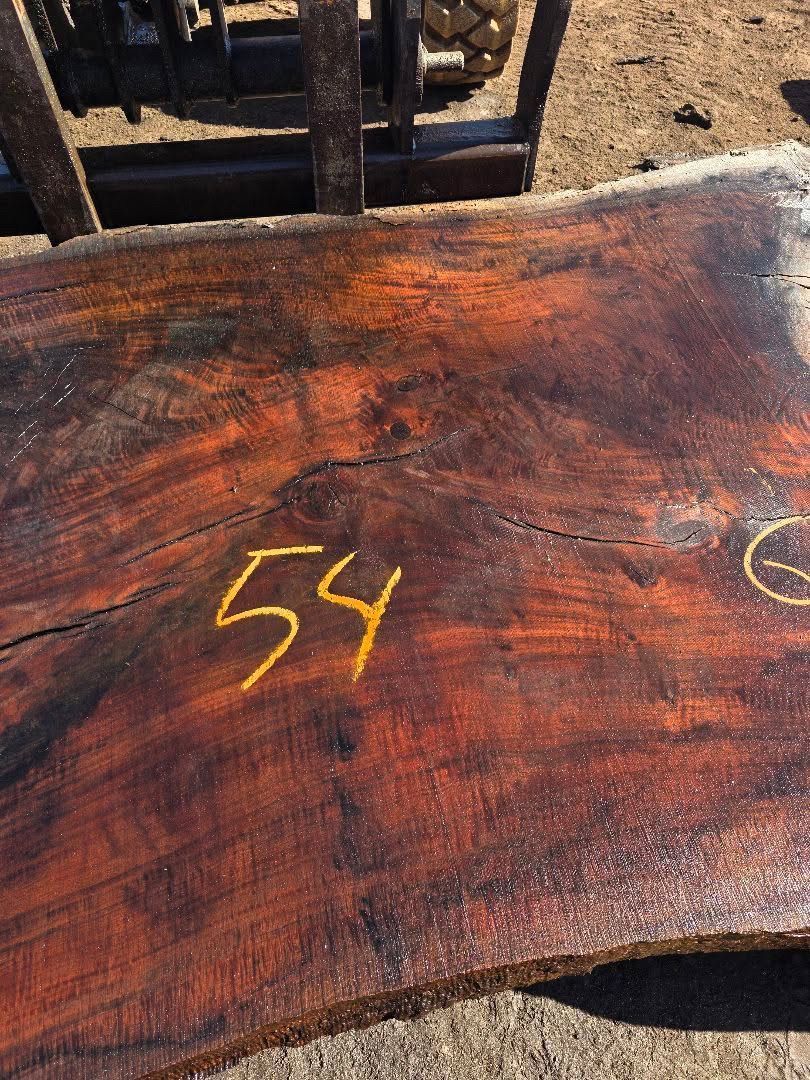
A large, dark red wooden slab with the number 54 written in yellow paint, sitting on a forklift.

The Paradox of the Hybrid: Strength and Beauty

In the world of timber, there is usually a trade-off: fast-growing trees tend to produce soft, low-density wood (like pine), while slow-growing trees produce hard, high-density wood (like oak or standard walnut). Bastogne walnut breaks this rule entirely. It grows significantly faster than both of its parent species—sometimes twice as fast—yet it produces wood that is denser and harder than either English or Claro walnut. This unique characteristic is known as "hybrid vigor."

This high density makes it an exceptional material for custom dining tables . It resists dents and scratches far better than most other domestic hardwoods. When you run your hand across a finished piece of Bastogne walnut, you can feel the weight and the tight-knit grain structure that gives the wood its legendary durability.

Key visual features of Bastogne walnut include:

  • Iridescent Figure : Often displays "fiddleback" or "curly" patterns that shimmer in the light.
  • Deep Color Contrast : A mix of creamy sapwood and dark, chocolatey heartwood with streaks of red and gold.
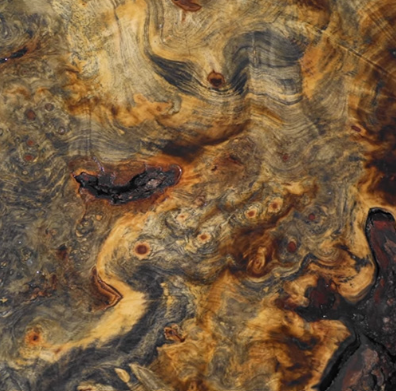
  • Marble Grain : Swirling patterns that look more like stone than wood, especially near the tree's base.
  • High Luster : Naturally takes a high-gloss or satin finish with incredible clarity.
  • Tight Grain Structure : Offers a smooth, non-porous feel that is ideal for dining surfaces.

What makes the grain of Bastogne walnut unique?

If you are looking for a table that looks like a work of abstract art, Bastogne walnut is the answer. Because the tree grows so quickly but remains so dense, the internal stresses of the wood create visual "figures" that are rarely seen in other species. You will often see dramatic "crotch" grain where branches met the trunk, or swirling burls that provide a topographical look to the surface.

One of the most sought-after patterns in Bastogne walnut is the "fiddleback." This is a tight, horizontal wave pattern that runs perpendicular to the grain. In the sunlight, these waves appear to move, creating a three-dimensional effect that adds depth and movement to a room. This is why many designers in Huntersville & Cornelius NC choose Bastogne walnut for high-end luxury interiors; it acts as a focal point that changes throughout the day as the lighting shifts.

Beyond the shimmer, the color palette of Bastogne walnut is broader than standard Black Walnut. While Black Walnut is generally a uniform dark brown, Bastogne can have undertones of smoky grey, burnt orange, and even hints of purple. This variety allows us to create live edge furniture that coordinates with a wide range of flooring and cabinetry styles.

Comparing Bastogne Walnut to Black Walnut

Many clients ask us how Bastogne walnut differs from the more common American Black Walnut. While both are beautiful, they offer very different experiences for the homeowner. Black Walnut is the "classic" choice—stable, reliable, and possessing a deep, rich brown tone. However, it is slightly softer on the Janka hardness scale compared to its hybrid cousin.

Bastogne walnut is essentially Black Walnut on steroids. It is heavier, harder to work with (requiring specialized tools and sharper blades), but the end result is a surface that is nearly indestructible. On the Janka scale, Bastogne walnut typically ranks around 1,300 to 1,500 lbf, whereas American Black Walnut sits around 1,010 lbf. This makes Bastogne closer in hardness to White Oak or Hard Maple, but with the sophisticated aesthetic of walnut.

When we process these logs into kiln-dried hardwood slabs , we have to be incredibly careful. Because the wood is so dense, the drying process must be slow and controlled to prevent internal cracking. This attention to detail is what ensures your table won't warp or twist decades down the line.

Is Bastogne walnut durable enough for family dining?

Absolutely. In fact, its durability is one of its strongest selling points. For a family table that sees daily use—homework, crafts, holiday dinners, and morning coffee—you want a wood that can handle the friction of daily life. Bastogne walnut’s high density means it doesn't compress easily under pressure.

To ensure your table lasts for generations, we recommend:

  • High-Quality Finishes : We use premium oils and urethanes that bond with the wood fibers to enhance the natural grain.
  • Consistent Environment : Keeping your home's humidity stable helps the wood stay in its natural state.
  • Minimal Maintenance : A simple wipe with a damp cloth is often all that's needed to keep the luster alive.
  • Coaster Usage : While the wood is tough, protecting the finish from extreme heat or standing water is always wise.
  • Occasional Re-oiling : Depending on the finish, a light refresh every few years can keep the "glow" of the Bastogne grain vibrant.

Crafting Heirlooms at Rustic River Designs

At Rustic River Designs, we believe that a table should tell a story. Bastogne walnut tells a story of survival, rarity, and scientific curiosity. From our workshop in Huntsville, we take these rare slabs and transform them into pieces that will be passed down from your children to your grandchildren. Our custom design process involves you at every step, from selecting the raw slab in our inventory to choosing the perfect leg style and finish sheen.

Investing in a Bastogne walnut table is more than just a furniture purchase; it is the acquisition of a rare natural resource. As these trees become harder to find, the value of well-crafted Bastogne pieces continues to rise. Whether you are looking for a massive conference table or an intimate dining piece, we are here to help you bring the beauty of the North Carolina wilderness into your home through this extraordinary wood.

Key Takeaways for Choosing Bastogne Walnut:

  • Unmatched Rarity : A hybrid wood that cannot be easily replanted, ensuring your piece is truly one-of-a-kind.
  • Superior Hardness : Outperforms standard walnut in durability and scratch resistance.
  • Dynamic Visuals : Features incredible iridescent grain patterns like fiddleback and marble swirls.
  • Investment Value : High-end appeal that adds significant character and value to luxury homes.
  • Sustainable Sourcing : We focus on reclaimed and responsibly sourced slabs for all our heirloom builds.

Recent Posts

Close up of buckeye burl wood grain and patterns showing grey and gold tones
March 25, 2026
Discover what makes buckeye burl wood the rarest choice for luxury custom tables. Learn about its unique grain, color, and how it's used in epoxy river furniture.
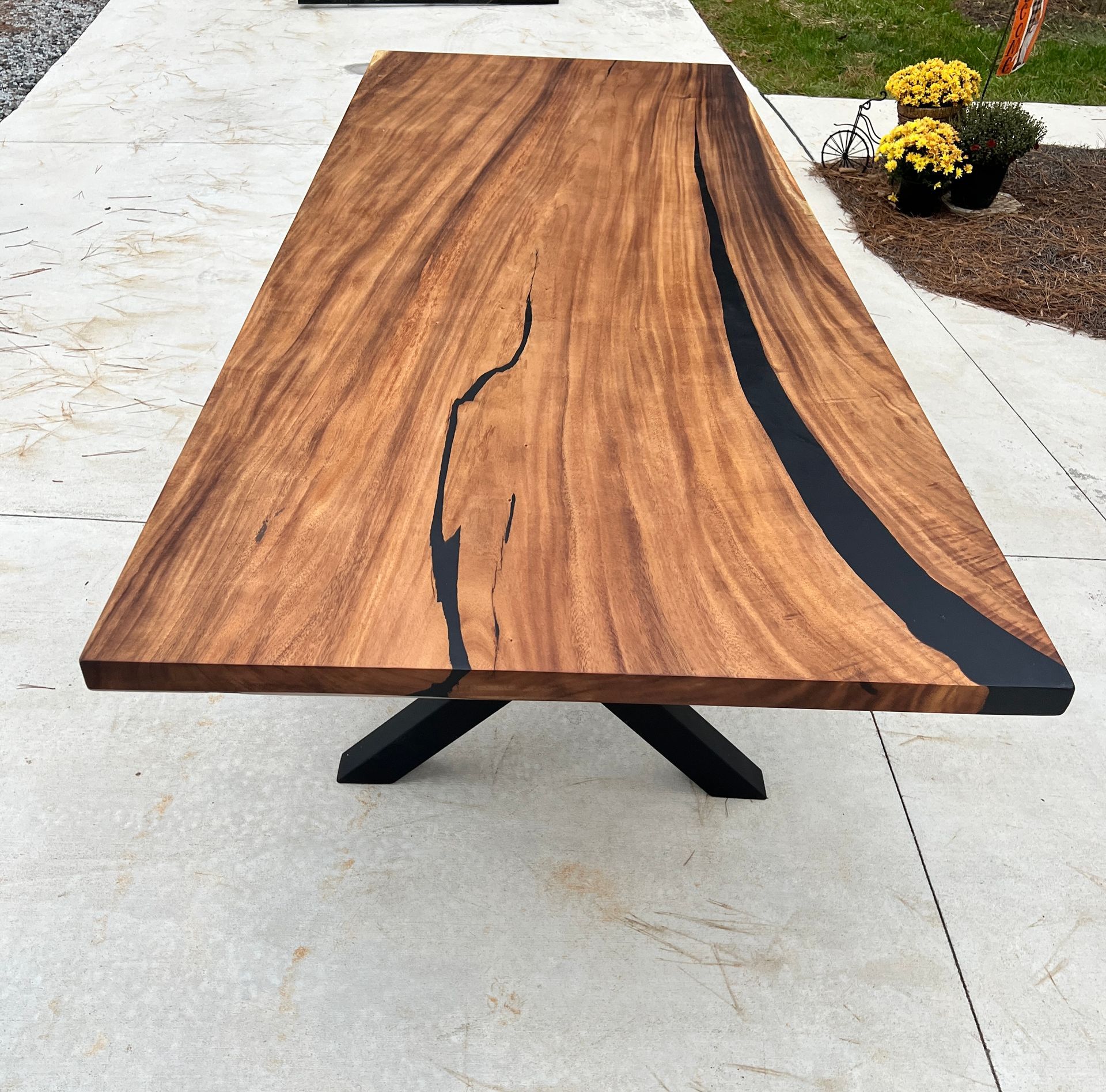
Wooden table with black resin river, on a black metal base, outdoors.
By Austin Gregory January 23, 2026
Learn how to choose custom furniture and epoxy river tables in Charlotte, NC. Wood types, pricing, care tips, and expert buying advice.
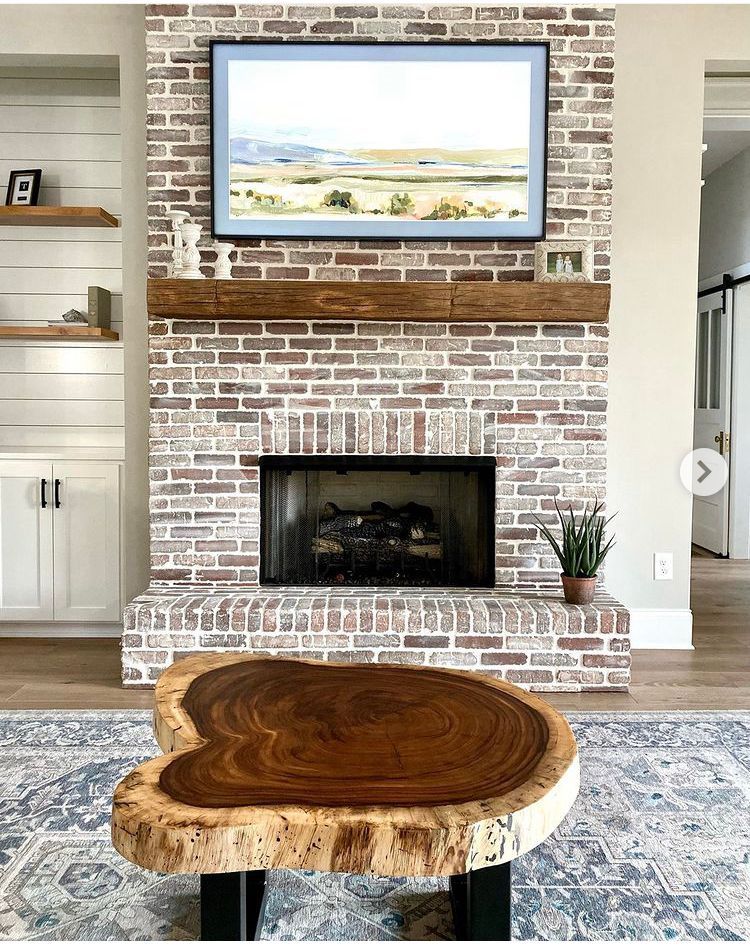
Living room with a brick fireplace, wooden mantle, TV, and live-edge coffee table on a rug.
By Austin Gregory September 28, 2025
Expert tips for maintaining live edge furniture in Charlotte and Asheville, NC. Serving Concord and Mooresville with proper wood care advice.
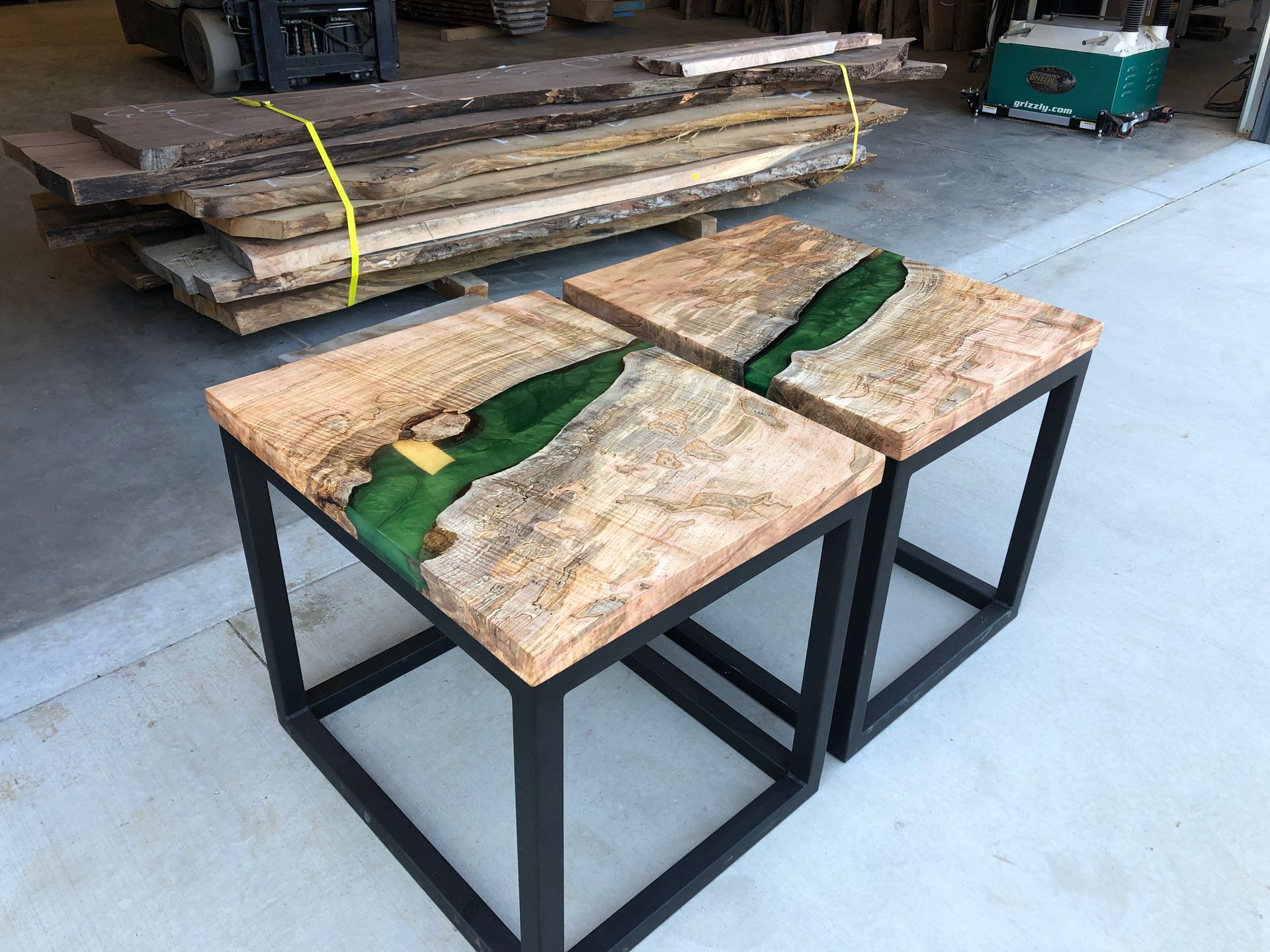
Two square wooden tables with green resin insets, black metal frames.
By Austin Gregory September 28, 2025
Learn how to care for an epoxy river table in Charlotte and Asheville, NC. Cleaning tips, protection advice, and long-term care for Concord and Mooresville homes.
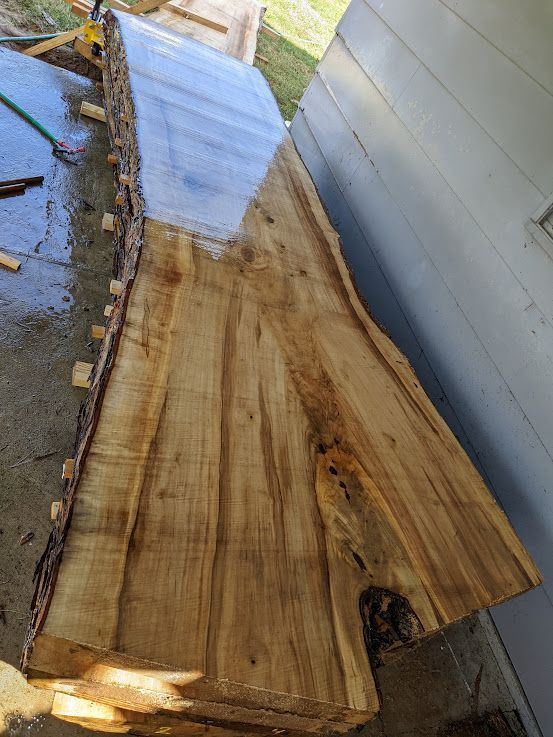
Live-edge slab of light-colored wood, possibly a tabletop, rests against a white wall and concrete.
By Austin Gregory September 28, 2025
Learn the difference between kiln-dried and air-dried wood slabs in Charlotte and Asheville, NC. Serving Concord and Mooresville buyers.
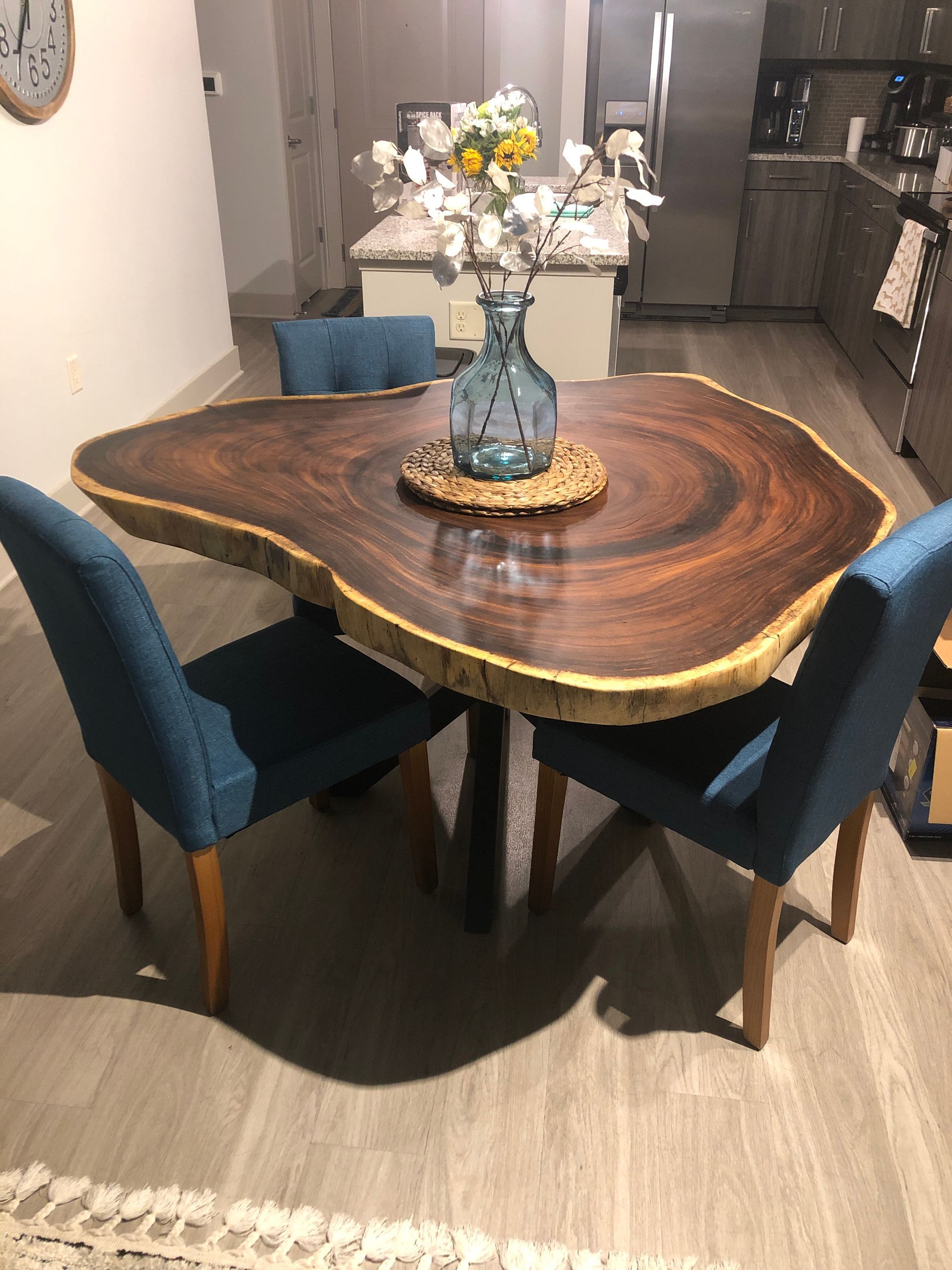
Live edge wooden dining table with blue chairs and vase of flowers.
By Austin Gregory September 28, 2025
Compare epoxy river tables and live edge tables in Charlotte and Asheville, NC. Serving Concord and Mooresville with custom handcrafted furniture.
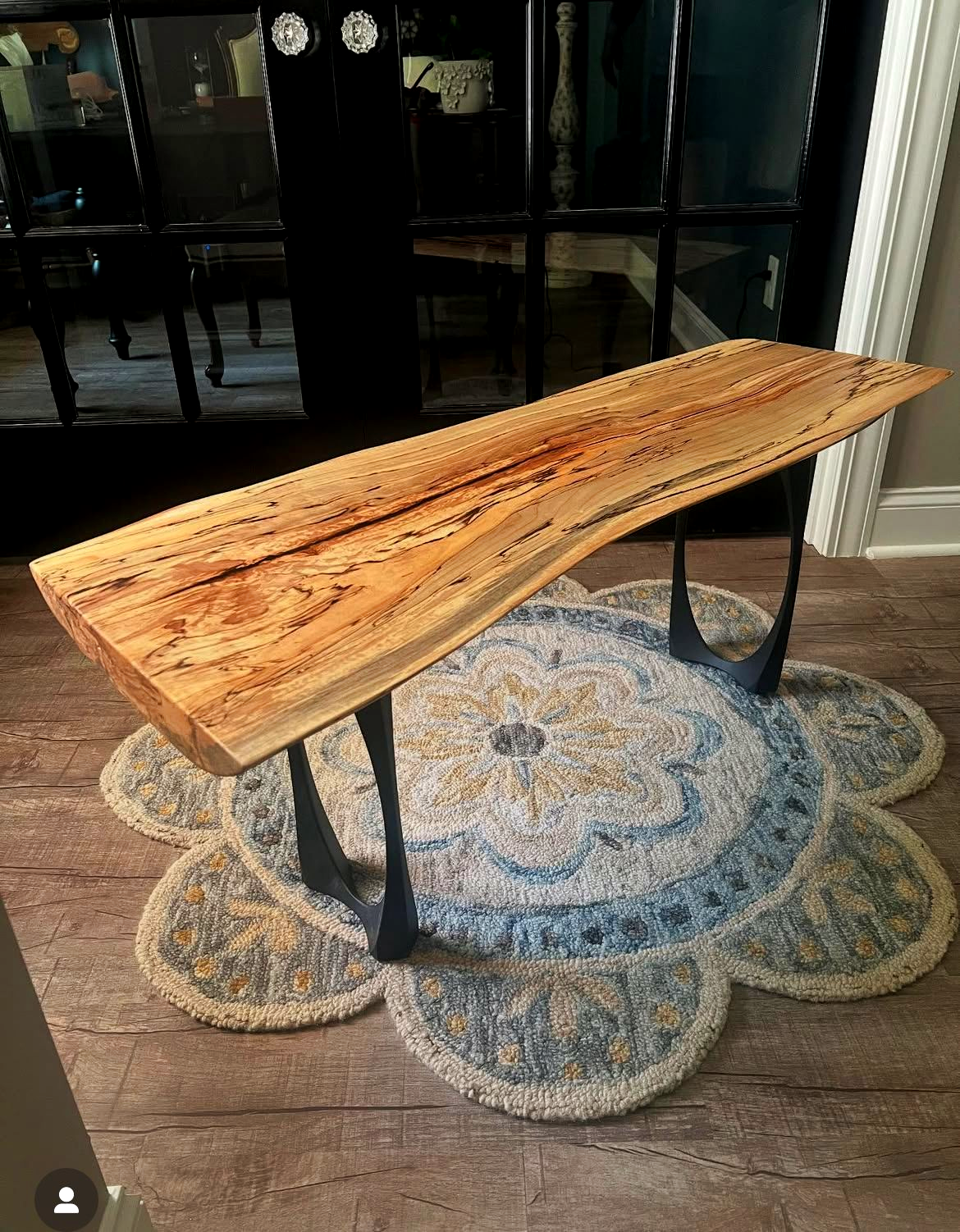
Live edge wood bench on black metal legs, set on a floral rug over wood flooring.
By Austin Gregory September 28, 2025
Learn how to choose the right epoxy river table in Charlotte and Asheville, NC. Serving Concord and Mooresville with custom sizing, wood, and finishes.
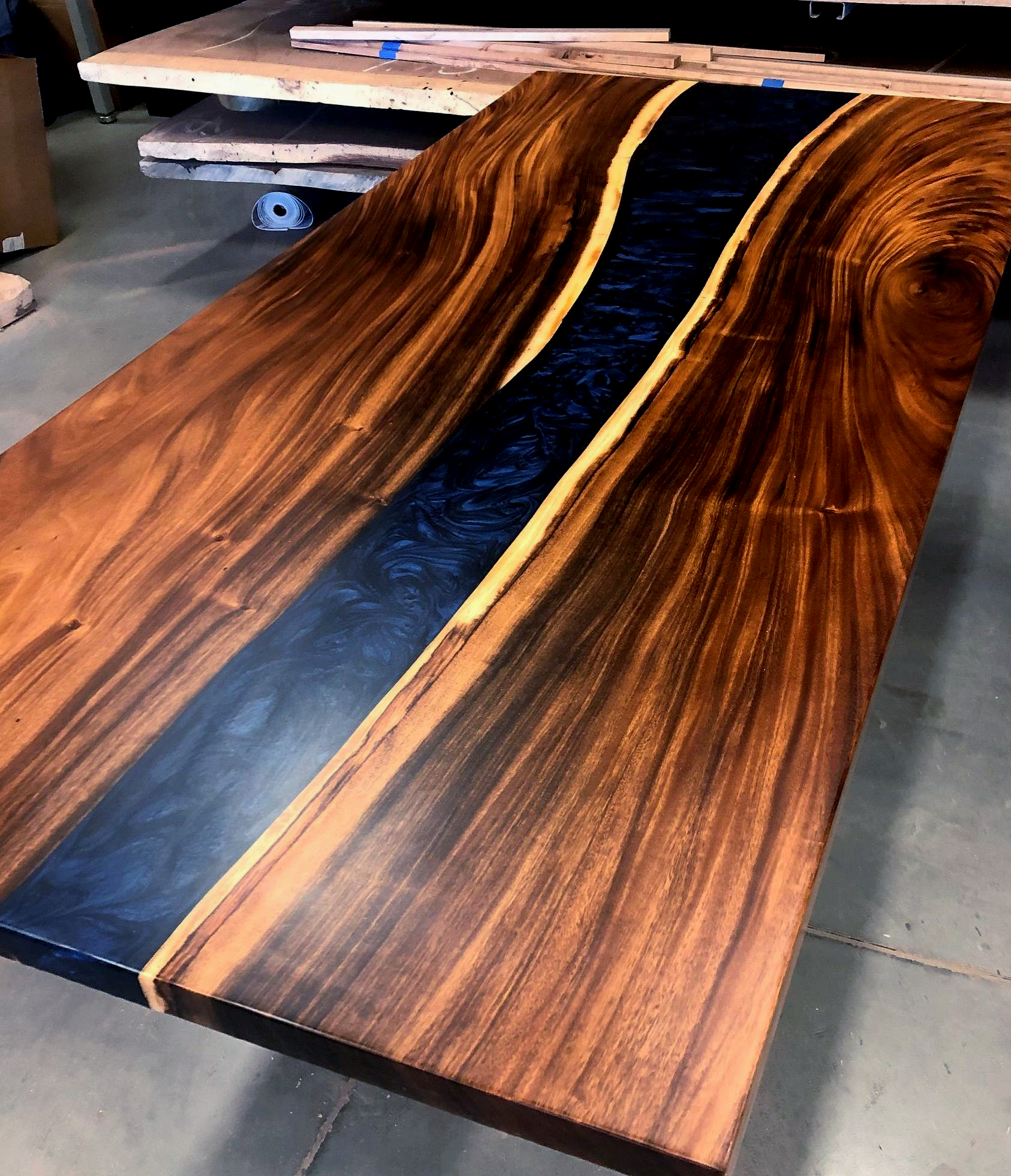
Wooden table with dark blue resin river.
By Austin Gregory September 28, 2025
Learn how to choose the right epoxy river table for your home in Charlotte, NC. Compare sizes, wood types, finishes, pricing, and expert tips.